
Sonam Wangchuk Hunger Strike: Reasons, CJP Demands & Latest Updates
Why is Sonam Wangchuk on a hunger strike? Learn about the reasons behind the protest, the key demands raised during the movement, the role of CJP, and the latest developments.

Study4India Team
Expert Educator
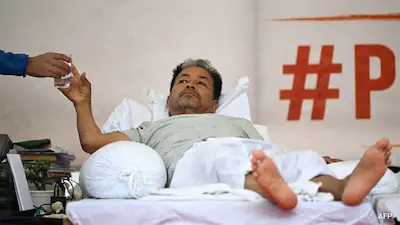
Activist Sonam Wangchuk Forcibly Taken to Hospital After 20-Day Hunger Strike
In a dramatic early-morning swoop on Saturday, 18 July 2026, Indian activist and educationist Sonam Wangchuk was forcibly removed from his protest site at Delhi’s Jantar Mantar and taken to Safdarjung Hospital. The 59-year-old had been on an indefinite hunger strike for the past 20 days, consuming only salt and water, in solidarity with the satirical online movement Cockroach Janta Party (CJP).
The protesters are demanding the immediate resignation of Union Education Minister Dharmendra Pradhan following the NEET-UG 2026 paper leak that forced the cancellation of the medical entrance exam in early May. Wangchuk had lost more than 9 kg and was in considerable pain before today’s removal.
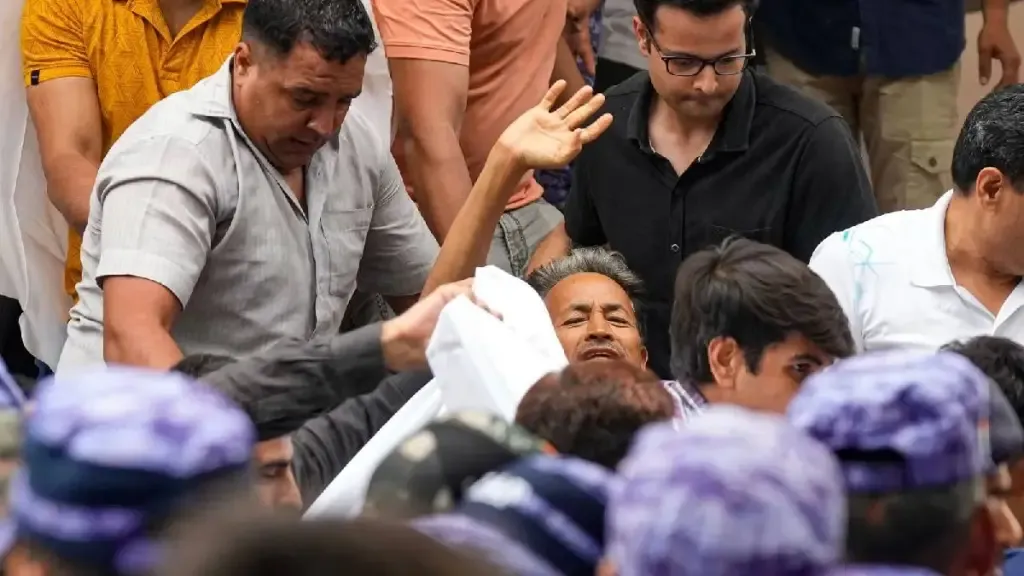
Figure 1: Sonam Wangchuk during his indefinite hunger strike at Jantar Mantar, demanding education reforms. (Source: Getty Images)
Key Highlights of the Incident
- Who: Sonam Wangchuk (59), education activist and Ramon Magsaysay awardee.
- What: Forcibly removed by Delhi Police and paramilitary personnel from a 20-day hunger strike.
- When: ~7:30 AM IST on Saturday, 18 July 2026.
- Where: Jantar Mantar protest site, New Delhi; admitted to Safdarjung Hospital.
- Why: Demanding resignation of Education Minister Dharmendra Pradhan over NEET-UG 2026 paper leak.
- Current Status: Wangchuk is stable and under medical supervision; CJP founder Abhijeet Dipke continues the fast.
The Hunger Strike and the Forcible Removal
Wangchuk had been lying on a stage at Jantar Mantar, a historic astronomical observatory turned protest venue, since late June 2026. Despite repeated appeals from supporters and a Delhi High Court order urging health monitoring, he refused to end his fast until the government engaged with the protesters’ demands.
At approximately 7:30 AM on 18 July, dozens of police and paramilitary personnel surrounded the stage. Videos from the site show the officers covering Wangchuk with bedsheets before carrying him away. Protesters who attempted to intervene were pushed back. Moments later, an ambulance sped off towards Safdarjung Hospital.
Wangchuk’s wife, Gitanjali Angmo, later posted on X (formerly Twitter) that she was “at Safdarjung hospital where he has been admitted” and insisted that no treatment be administered without family consent. Dr. Charu Bamba, Medical Superintendent of Safdarjung Hospital, confirmed that Wangchuk was “fully alert and stable” but weak and mildly dehydrated.
Who Is Sonam Wangchuk?
Sonam Wangchuk is a renowned engineer, innovator, and education reformist from Ladakh. He inspired the character of Phunsukh Wangdu in the Bollywood film 3 Idiots. Known for his work on eco-friendly solutions and educational reforms, Wangchuk has previously undertaken hunger strikes to demand autonomy and environmental protection for Ladakh.
His participation in the CJP agitation brought national attention to the issue of exam paper leaks, a recurring problem that has affected millions of students across India.
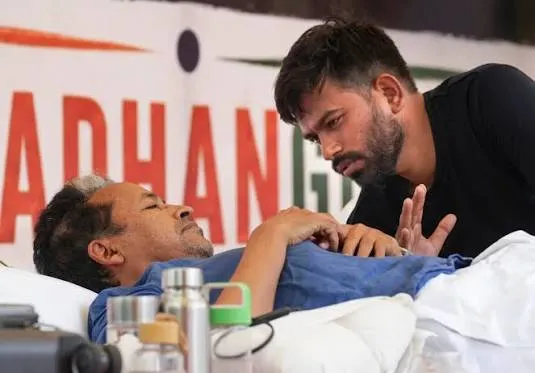
Figure 2: CJP founder Abhijeet Dipke, who has now taken over the indefinite hunger strike in Wangchuk’s place. (Source: Getty Images)
The Cockroach Janta Party and Education Reforms
The Cockroach Janta Party (CJP) began in May 2026 as an online satirical movement lampooning the government’s handling of examination irregularities. Its supporters, self-identified as “cockroaches,” demand systemic reforms to prevent paper leaks in high-stakes exams like NEET-UG, JEE, and others.
The movement gained momentum after the NEET-UG 2026 paper leak, which led to the cancellation of the exam for aspiring medical students. The protesters have demanded the resignation of Education Minister Dharmendra Pradhan, arguing that he must take moral responsibility for the repeated failures of the examination system.
| Date | Event |
|---|---|
| May 2026 | NEET-UG 2026 cancelled due to paper leak; CJP movement starts online. |
| Late June 2026 | Sonam Wangchuk begins indefinite hunger strike at Jantar Mantar, Delhi. |
| 16 July 2026 | Wangchuk enters 19th day of fast; former Delhi CM Arvind Kejriwal visits. |
| 17 July 2026 | Delhi High Court orders regular health monitoring and medical care for Wangchuk. |
| 18 July 2026 | Police forcibly remove Wangchuk; he is admitted to Safdarjung Hospital. Abhijeet Dipke begins indefinite fast. |
| 20 July 2026 (Planned) | Protesters vow to march to Parliament despite Wangchuk’s hospitalisation. |
Delhi High Court Order and Hospitalisation
On Thursday, 17 July 2026, the Delhi High Court directed the federal government to “regularly monitor the health” of Sonam Wangchuk and provide necessary medical treatment. Deputy Commissioner of Police Sachin Sharma later stated that the removal was carried out “in compliance with [the court] order, and based on health conditions and medical advice.”
While Wangchuk’s supporters have accused the authorities of using the court order as a pretext to break the protest, police maintain that the intervention was essential to prevent further deterioration of his health. Wangchuk had reportedly lost over 9 kg and was showing signs of severe weakness and dehydration.
What’s Next? March to Parliament and Dipke’s Fast
With Wangchuk hospitalised, CJP founder Abhijeet Dipke has taken over the indefinite hunger strike. Dipke confirmed that the planned march to the Indian Parliament on 20 July 2026 will go ahead as scheduled. “If they think that taking Wangchuk away will end this movement, they are mistaken,” he said.
Dipke has also expanded the protesters’ demands, now calling for the resignation of Prime Minister Narendra Modi, in addition to Education Minister Dharmendra Pradhan. The move signals an escalation in the standoff between the agitators and the government.
Demands of the Protesters
- Immediate resignation of Union Education Minister Dharmendra Pradhan over NEET-UG 2026 paper leak.
- Comprehensive examination reforms to prevent future leaks in NEET, JEE, and other national-level tests.
- After 18 July incident, resignation of Prime Minister Narendra Modi (added by CJP).
- Right to peaceful protest and dialogue with student and activist groups.
Reactions and Political Fallout
The forced removal of Sonam Wangchuk drew sharp criticism from opposition parties and civil society organisations. Several Members of Parliament described the police action as “shocking coercive state violence” and “an assault on democracy.”
Former Delhi Chief Minister Arvind Kejriwal, who had visited Wangchuk on 16 July, reiterated his appeal for the government to listen to the students and the activist. “Every year, exam papers get leaked and youth pay the price. I appeal to the government to engage with the protesters,” he said.
The central government, however, has not yet formally engaged with the protesters. Education Minister Dharmendra Pradhan had previously dismissed the CJP as “the B-team of disruptive elements,” while Prime Minister Modi’s administration has remained silent on the latest developments.
Conclusion
The forcible hospitalisation of Sonam Wangchuk marks a dramatic turning point in the month-long agitation over examination reforms. While the government justifies the move as a necessary health intervention, the protesters view it as an attempt to crush the movement.
With Abhijeet Dipke now leading the fast and a march to Parliament imminent, the coming days will determine whether this pressure forces a dialogue or escalates into a larger political confrontation. For lakhs of students and aspirants, the core demand remains unchanged: accountability and reform in India’s broken examination system.
Comments (0)
Leave a Reply
Your email address will not be published. Required fields are marked *
No comments yet. Be the first to start the discussion!