
Telegram Blocked in India: The Extreme Step to Prevent NEET Question Paper Leaks
In a historic and unprecedented move, the Indian government has blocked Telegram nationwide to curb the rampant leak of NEET UG question papers. Here is a complete analysis of why it happened and how students can adapt.

Study4India Team
Expert Educator
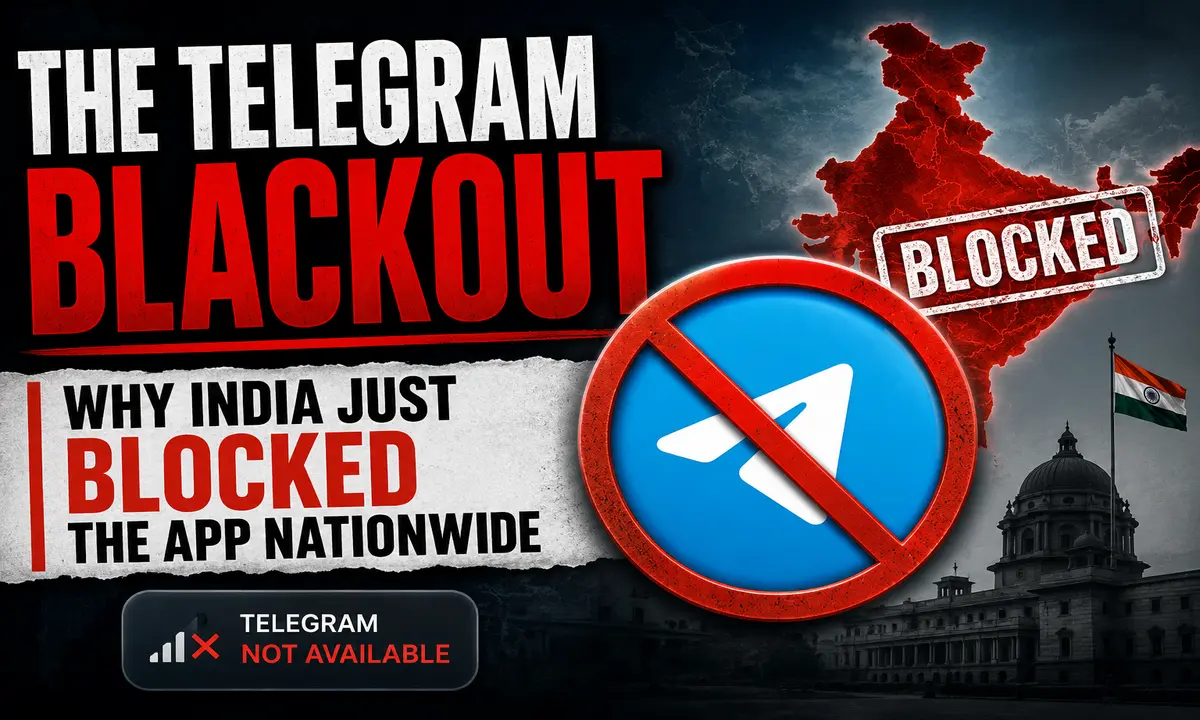
The Day the Digital Classrooms Went Dark
The digital landscape of Indian education was fundamentally altered overnight. Millions of students, educators, and coaching institutes woke up to a jarring reality: the spinning 'connecting...' wheel on their Telegram apps. What started as whispers of a temporary server outage quickly solidified into an unprecedented, nationwide directive from the Ministry of Electronics and Information Technology (MeitY). Telegram had been officially blocked across all major Indian ISPs and telecom networks.
The catalyst for this drastic measure wasn't political dissent or financial fraud. It was something that strikes at the very heart of the nation's future: the sanctity of the National Eligibility cum Entrance Test (NEET UG). The rampant, seemingly unstoppable leak of question papers had reached a breaking point, and Telegram was identified as ground zero for the syndicates orchestrating this educational sabotage.
Key Takeaways
- Telegram blocked nationwide under Section 69A of the IT Act.
- Move triggered by massive syndicates selling leaked NEET and JEE papers.
- Over 5 million honest students lose access to legitimate study communities.
- Students are urgently migrating to verified web platforms like Study4India.
The Anatomy of a Paper Leak: Why Telegram?
To understand the government's heavy-handed response, one must understand why Telegram became the weapon of choice for the "solver gangs" and paper leak mafias operating across states like Bihar, Rajasthan, and Haryana.
Unlike WhatsApp, which limits group sizes and forwards, or traditional forums that leave digital footprints, Telegram offered a perfect storm of features for illicit mass distribution:
- Uncapped Anonymity: Users can operate without exposing their phone numbers. A username is enough. This allowed gang leaders to orchestrate massive networks without fear of immediate trace-backs by local cyber cells.
- Massive Group Capacities: Telegram allows up to 200,000 members in a single group, and unlimited subscribers in Channels. A leaked paper could reach half a million desperate aspirants in a matter of seconds.
- Self-Destructing Messages: Secret chats with self-destructing timers ensured that once a transaction (often in cryptocurrency or untraceable UPI drops) was made and the paper delivered, the evidence vanished without a trace.
- Heavy File Sharing: The ability to share massive PDF files, high-resolution scans, and ZIP folders meant that entire question papers and answer keys could be uploaded in pristine quality instantly.
While these features made Telegram a darling of the global privacy community—and an incredibly useful tool for honest educators sharing heavy video lectures and NCERT PDFs—it also made it a virtually impenetrable fortress for criminals undermining the Indian education system.
The NEET Epidemic: A System Under Siege
The National Eligibility cum Entrance Test (NEET) is arguably one of the most high-stakes examinations globally. With over 2.4 million students competing for roughly 100,000 MBBS seats, the pressure is unimaginable. This immense pressure creates a lucrative black market.
In recent years, the National Testing Agency (NTA) has faced mounting criticism. Reports of breached strong rooms, compromised invigilators, and sophisticated Bluetooth communication devices have plagued the exams. However, the physical leak of a paper is only step one. Step two is distribution.
"A leaked paper in the 1990s might reach 50 students in a single city. A leaked paper in the era of Telegram reaches 50,000 students across 20 states in five minutes. The scale of the threat had evolved, but our countermeasures hadn't."
— Dr. R.K. Sharma, Education Policy Analyst
Investigations into recent leaks revealed a disturbing pattern. Papers were photographed using micro-cameras mere hours (sometimes minutes) before the exam, sent to a central "solver room," and the solved answer keys were broadcasted via private, paid Telegram channels. Subscribers, who paid anywhere from ₹50,000 to ₹5 Lakhs, received the keys just in time to memorize or smuggle them into the halls.
When the authorities attempted to request user data to track the administrators of these channels, they were repeatedly met with Telegram's strict privacy policies and lack of a cooperative nodal office in India. Faced with the potential cancellation of the entire NEET exam—a logistical nightmare costing hundreds of crores and affecting millions of innocent students—the government pulled the ultimate plug.
The Collateral Damage: The Honest Aspirant
While the blockade struck a blow to the paper leak mafias, the collateral damage has been catastrophic for the average Indian student. Telegram was not just a dark web for criminals; it was the largest decentralized library in the country.
The Loss of Democratized Education
For students in Tier-3 cities and rural villages who could not afford exorbitant coaching fees in Kota or Delhi, Telegram was a lifeline. It hosted thousands of channels run by benevolent educators, toppers, and study groups where high-quality resources were shared freely. These included:
- Scanned copies of expensive reference books (H.C. Verma, D.C. Pandey).
- Daily Practice Papers (DPPs) from top coaching institutes.
- Mind maps, short notes, and flashcards.
- Peer-to-peer doubt-solving communities active at 3 AM.
With the platform suddenly inaccessible, panic has set in. "My entire revision strategy for the next three months was based on a repository of mock tests saved in my Telegram 'Saved Messages'. Now, I have nothing," lamented Priya Das, a NEET aspirant from West Bengal.
Warning Regarding VPNs
Many students are attempting to bypass the ban using free Virtual Private Networks (VPNs). Cybersecurity experts strongly advise against this. Free VPNs often harvest user data, steal passwords, and can expose students to malware. Furthermore, accessing banned platforms to seek leaked papers is a criminal offense.
The Pivot: Where Does the Student Community Go Now?
Nature abhors a vacuum, and the digital education space is no different. The Telegram blackout has forced a massive migration. But where are students migrating to?
Initially, there was a surge toward WhatsApp Channels and Discord. However, WhatsApp's strict forward limits and lack of anonymity make it unsuitable for large-scale, open study groups. Discord, while excellent for community building, has a steep learning curve and uses significant mobile data, making it less accessible for rural students.
This is where trusted, dedicated educational web platforms have stepped up to bridge the gap.
The Rise of Verified Platforms like Study4India
The era of relying on unverified, anonymous social media channels for serious academic preparation is ending. The Telegram ban highlights the critical need for structured, reliable, and verified platforms.
Platforms like Study4India have experienced a massive influx of users in the wake of the ban, and for good reason. They offer the resources students lost, but without the legal ambiguities or risks of scams:
- 100% Verified Content: Unlike a Telegram PDF that might contain wrong answers intentionally spread by competitors, resources on Study4India are curated and verified by expert educators.
- Structured NCERT Solutions: Instead of scrolling endlessly through a chat history to find a specific physics solution, web platforms offer organized, chapter-wise NCERT solutions.
- Secure Mock Tests: Telegram could only provide PDF question papers. Modern platforms provide timed, simulated mock tests with instant AI-driven analytics, All India Ranks, and weak-point identification.
- Zero Distractions: Telegram is a messaging app. Study groups are constantly interrupted by spam, off-topic chats, and promotions. A dedicated web platform provides a distraction-free environment focused purely on learning.
Lost Your Telegram Study Groups?
Don't let the ban derail your preparation. Get instant, free access to premium NCERT solutions, previous year papers, and the best NEET/JEE mock tests on a secure, legal platform.
Start Free Mock Test NowThe Legal Framework: How Was the Ban Executed?
For those interested in the technical and legal mechanics, the ban was executed under Section 69A of the Information Technology Act, 2000. This section empowers the Central Government to block public access to any information online in the interest of "sovereignty and integrity of India, defense of India, security of the State, friendly relations with foreign States or public order."
In this context, the government argued that the mass leaking of critical examinations compromises the "security of the State" and disrupts "public order" by potentially inciting massive student protests and destroying the credibility of national institutions.
The directive was sent to the Department of Telecommunications (DoT), which then instructed all Internet Service Providers (Jio, Airtel, Vi, BSNL, etc.) to block access to Telegram's IP addresses and DNS servers. This is why the app suddenly stopped updating, and the website became unreachable.
Looking Ahead: The Future of EdTech and Exams
The Telegram blackout of 2026 will be remembered as a watershed moment in Indian education. It marks the end of the "Wild West" era of peer-to-peer file sharing for competitive exams.
Moving forward, we can expect several major shifts:
- Stricter Regulation of EdTech: The government will likely introduce stricter compliance laws for messaging apps operating in India, demanding faster turnaround times for law enforcement data requests.
- Overhaul of the NTA: The National Testing Agency will be forced to move away from purely physical paper distribution. We may see a rapid shift towards highly secure, localized Computer Based Tests (CBT) for all major exams, mimicking the CAT or GRE models.
- Centralized Resource Hubs: The government and private players will invest heavily in creating centralized, free repositories of study material to ensure that the ban on Telegram does not disadvantage poor students.
Conclusion: Adaptation is the Key to Survival
In the ruthless arena of competitive exams like NEET and JEE, adaptability is just as important as intelligence. The students who succeed this year will not be the ones who waste weeks trying to find VPN workarounds or mourning the loss of their Telegram groups.
The winners will be the ones who pivot immediately. They will consolidate their resources, transition to trusted platforms like Study4India, and get back to the grind. The medium of learning may have changed overnight, but the syllabus, the competition, and the dream of earning that white coat remain exactly the same.
Stay focused, stay ethical, and keep studying.
Comments (0)
Leave a Reply
Your email address will not be published. Required fields are marked *
No comments yet. Be the first to start the discussion!